
Blogs

Sharing knowledge is key to an innovative and healthy industry! This knowledge center is therefore a central place on our website to share information. Read all about our industry in the blogs below!

How to Choose the Best 9 Rubber Mixing Mill for Your Needs?

Choosing the best 9 Rubber Mixing Mill is crucial for your production needs. These mills play a significant role in the rubber industry, blending materials to create specific textures and qualities. The process of selection can be overwhelming due to various factors.

Consider your production volume and the type of rubber you use. The size and capacity of the mill should match your requirements. Some mills are designed for high-speed operations, while others focus on durability. It’s essential to prioritize reliability over flashy features that may not serve your needs.

Identifying a reputable manufacturer can also be challenging. Look for user reviews and testimonials to gauge the performance of different models. It’s okay to have doubts; many share the same concerns when investing in machinery. Balancing cost and quality is tricky but necessary. By carefully considering these points, you can find the right 9 Rubber Mixing Mill for your projects.
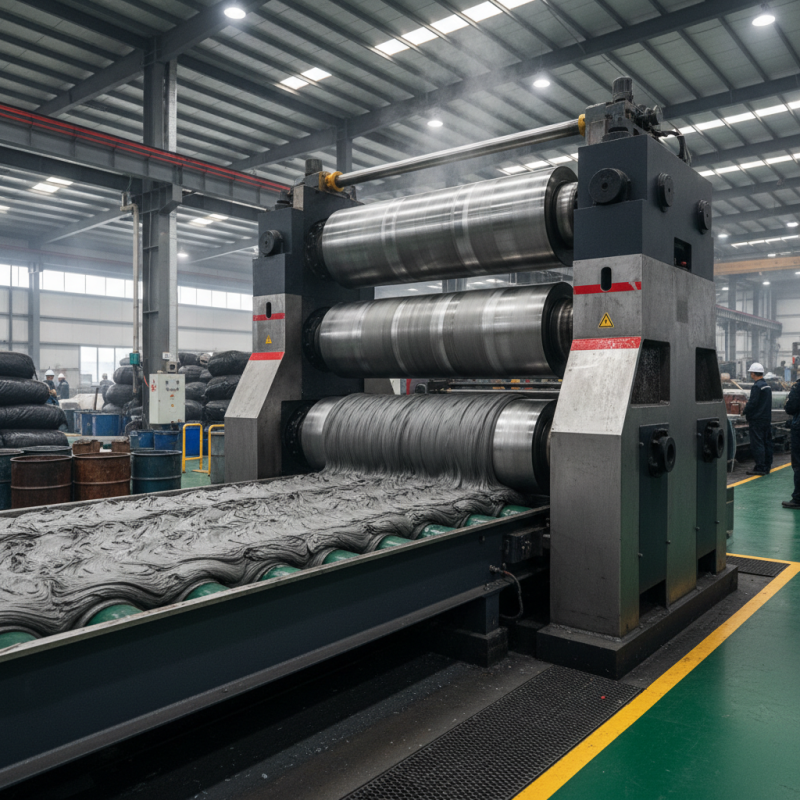
How to Choose the Best 9 Rubber Mixing Mill for Your Needs?

Understanding Rubber Mixing Mills: Types and Features

Rubber mixing mills play a crucial role in the rubber manufacturing process. They homogenize raw materials for better quality products. Understanding the various types of rubber mixing mills is key to selecting the right one.

There are two main types: internal and external mills. Internal mills, like banbury mixers, have rotating blades that mix the rubber materials vigorously. They often ensure better consistency but can be harder to clean. External mills, on the other hand, are simpler and more efficient for specific tasks. According to the "Global Rubber Mixing Mills Market Report 2023," about 45% of manufacturers still prefer internal mills for their ability to handle larger batches.

Features also matter. A mill’s heating system can dramatically affect processing time. Accurate temperature control helps maintain product quality. Notably, a report from the International Rubber Study Group (IRSG) states that mills with advanced temperature control can reduce energy consumption by 30%. However, some mills do not offer adequate safety features, which raises concerns. Investing in technology is essential, but some manufacturers overlook maintenance requirements, causing long-term issues.

Factors to Consider When Choosing a Rubber Mixing Mill

Selecting the right rubber mixing mill requires careful consideration of several factors. The mill's size is crucial. A mill that's too small may not meet production needs, while one that’s overly large can lead to inefficiencies. Industry data suggests that mills typically range from 24 to 72 inches in roll diameter. It’s vital to align your production capacity with the machine's dimensions.

Another key aspect is the type of materials you intend to process. Different formulations require specific mixing characteristics. A report from the Rubber Manufacturers Association highlights that mills optimized for certain compounds can improve mixing efficiency by up to 20%. Think about the viscosity and heat generation during processing. Some mills offer advanced cooling systems to manage this, which can enhance the quality of the final product.

Power consumption is another factor that shouldn't be overlooked. Rubber mixing mills can consume significant electricity. According to energy consumption studies, mills can use between 100 kW to 500 kW based on their size and design. An inefficient mill not only increases costs but also impacts the environment. Always analyze the energy requirements against your production schedule. It's essential to balance performance with sustainability in today's manufacturing landscape.

Evaluating Capacity and Efficiency for Your Application

When evaluating rubber mixing mills, capacity and efficiency are crucial. The ideal mill should accommodate your production needs. Determine your output requirements early on. Consider how much rubber you'll process daily. A mill with higher capacity often boosts efficiency. However, it can be costly. Balance your budget with your needs.

Tips: Assess your working environment. A mill's integration into your workspace matters significantly. Ensure there's enough space for operation and maintenance. Take note of energy consumption as well. Efficient machines save costs over time.

Also, focus on maintenance needs. Some mills require more upkeep than others. This can impact overall efficiency and costs. A well-maintained mill performs better, extends its lifespan, and reduces downtime. Think about how often you can manage maintenance.

Additionally, reflect on the type of rubber you'll be mixing. Different formulations may require distinct settings. A versatile mill can handle various mixes. Yet, ensure it doesn’t compromise on quality. Consider all these factors for your specific application.

Maintenance and Durability: A Key to Long-term Performance

When choosing the best rubber mixing mill, maintenance and durability are crucial. Regular upkeep can greatly influence the lifespan of your equipment. Studies show that a well-maintained mill can last up to 30% longer than one that is neglected. This emphasizes the need for routine checks and timely repairs.

Tips for maintenance: Consistently inspect components for wear. Lubricate moving parts regularly to prevent friction. Clean the mill after every use to avoid contamination. Even small neglects can lead to significant issues later on. Furthermore, investing in quality spare parts can enhance performance. A reliable source of components will ensure your mill operates efficiently, reducing downtime.

Durability also ties to operational practices. Operators must be trained to use the mill effectively. Improper handling can lead to premature failure. According to industry reports, about 25% of mills fail due to operator errors. Addressing this gap through training can enhance both performance and longevity. Ultimately, a proactive approach to maintenance and operator training creates a robust production environment.

Performance Comparison of Rubber Mixing Mills

Budgeting for Your Rubber Mixing Mill Investment

When budgeting for a rubber mixing mill, it's essential to consider all associated costs. Beyond the initial purchase price, include installation, maintenance, and operational expenses. These factors can significantly impact your overall investment. Many overlook these ongoing costs, leading to surprises later on. Creating a comprehensive financial plan will help you avoid overspending.

Tips: Always research and compare prices from different suppliers. Don’t forget to account for energy costs, as rubber mixing mills can consume significant power. You might find a less expensive mill that saves energy, balancing your budget effectively. Additionally, consider the long-term benefits of investing in a quality machine. Sometimes, higher upfront costs lead to lower repair expenses down the line.

Remember to reflect on your production needs. A mill too small may cause inefficiencies, while one too large could drain resources. Assess your output requirements and choose accordingly. Taking the time to evaluate all aspects will pay off. It might not be perfect, but with careful planning, you can make an informed decision that aligns with your budgetary constraints.

How to Choose the Best 9 Rubber Mixing Mill for Your Needs?

Model Mixing Capacity (kg) Motor Power (kW) Dimensions (L x W x H) (mm) Price Range (USD)
Model A 150 22 2500 x 1500 x 2000 $15,000 - $18,000
Model B 200 30 2600 x 1600 x 2100 $17,000 - $20,000
Model C 250 37 2800 x 1700 x 2200 $19,000 - $22,000
Model D 300 45 3000 x 1800 x 2300 $22,000 - $25,000
Model E 350 55 3200 x 1900 x 2400 $25,000 - $28,000
Model F 400 75 3400 x 2000 x 2500 $28,000 - $32,000
Model G 450 90 3600 x 2100 x 2600 $32,000 - $36,000
Model H 500 110 3800 x 2200 x 2700 $36,000 - $40,000
Model I 600 150 4000 x 2300 x 2800 $40,000 - $45,000

Article Source: